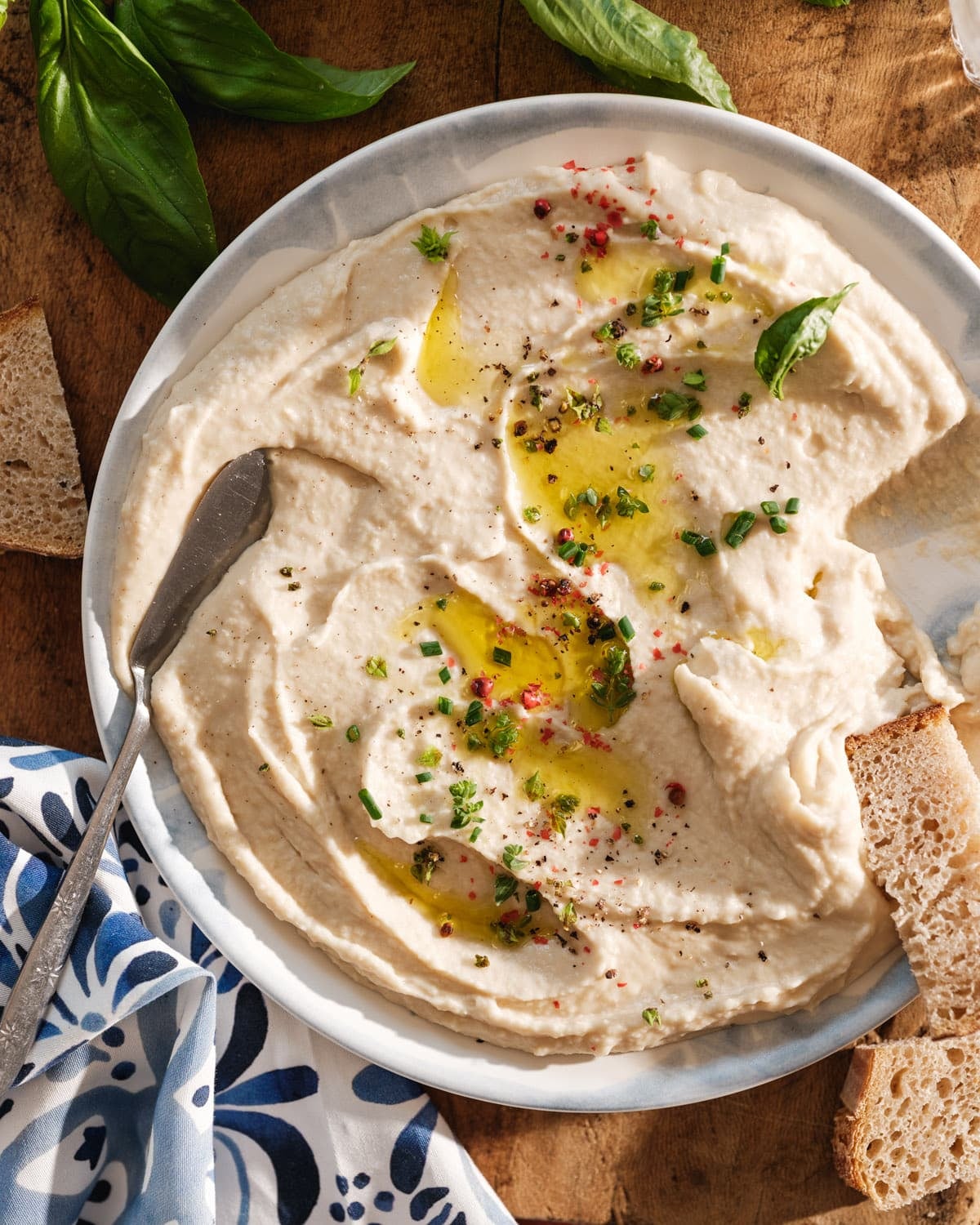
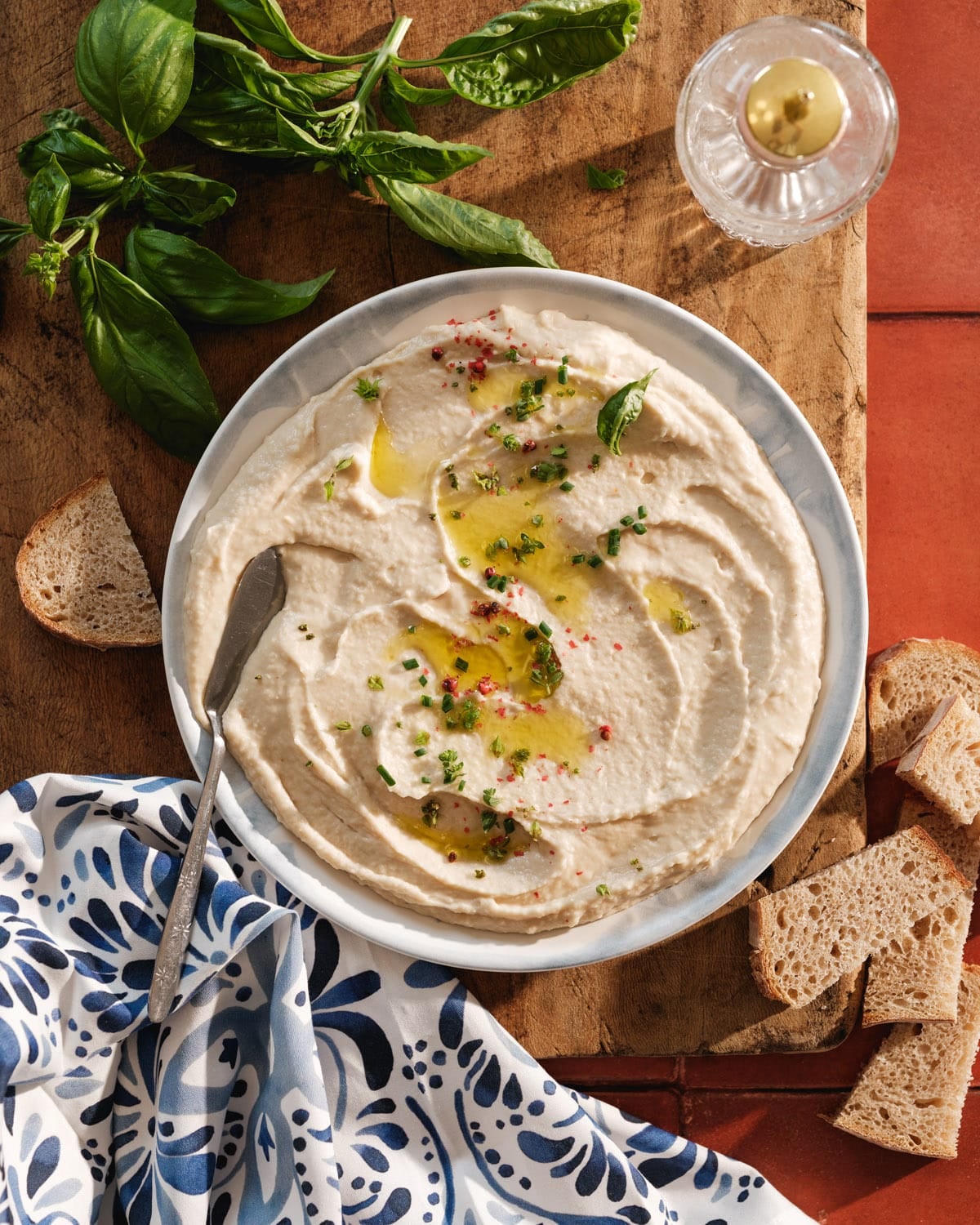
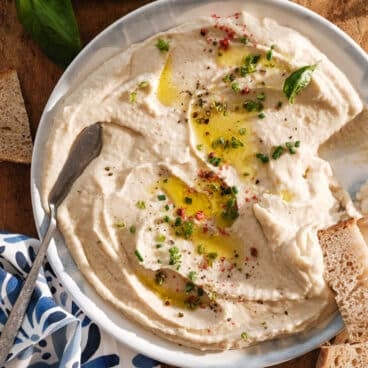
This creamy cannellini bean dip takes 5 minutes and blends garlic, lemon, and olive oil: no tahini needed! Serve it with pita, crackers, or crunchy veggies.
Here’s a confession: I might like this cannellini bean dip even better than hummus! That’s saying something from someone who’s written a half dozen hummus recipes over the years. This easy dip is packed with protein, so simple, and there’s no need to use tahini all.
This cannellini bean dip recipe was inspired by a creamy whipped feta dip I saw on Instagram. I thought: surely one can make this as a dip with white beans? Two cans of white beans, one lemon, a drizzle of olive oil, and five minutes later I had something smoother than any hummus I’ve made — and my kids absolutely love it!
5 Star Reader Review
“This is such a quick and easy dip, a nice alternative to hummus! I appreciate not needing to bust out the tahini, mix it because it separated, spill some, etc. We’ve all had it in our lunch bags with veggies to dip, such a nice snack!” -Tanvee
Why You’ll Love This Recipe
I love a good hummus recipe but I’m also all about this cannellini bean dip. It’s full of fiber and such a fun healthy snack! Here’s what you’ll love it:
Five ingredients: They’re all pantry staples, plus salt and pepper.
Healthy snack made of whole foods: It’s naturally vegan and gluten-free, with a good amount of fiber and plant protein. It’s one of my favorite Mediterranean diet snacks.
Two ways to serve it: Make it bright and lemony or swirl in basil pesto for a fun variation.
Ingredients for Cannellini Bean Dip
Here’s all you need to have on hand for this one:
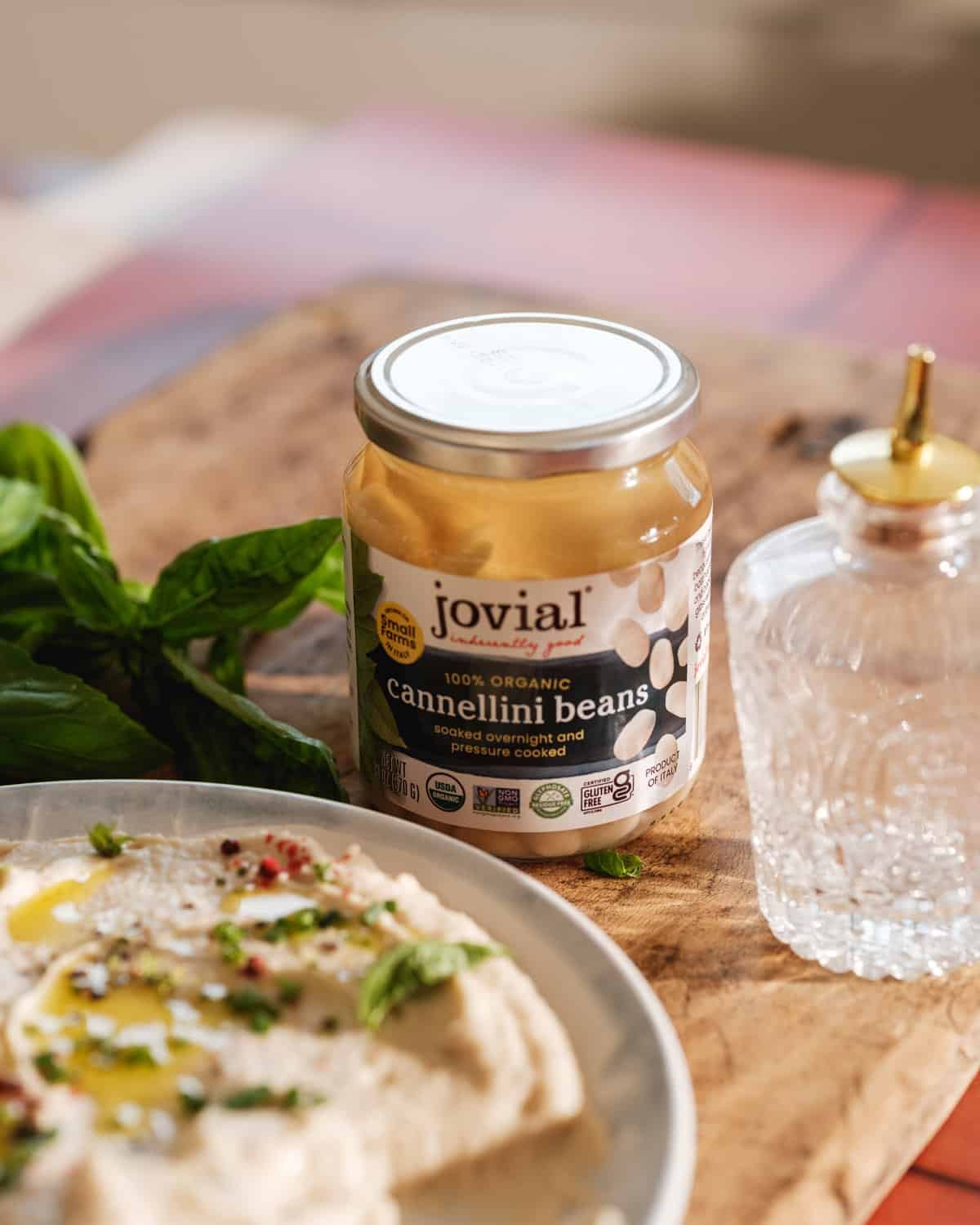
Cannellini beans: This type of bean is also called white kidney beans. They’re larger and creamier than navy or Great Northern beans, but those work as an easy swap.
Garlic: Raw garlic gets punchier as the dip sits, so don’t add more than specified in the recipe below. For a mellower version, use less or even try roasted garlic.
Lemon juice: Use fresh lemon juice only; bottled tastes flat. (I still need to remind my mom of that!)
Olive oil: This oil adds richness to the dip.
Cumin: If you’re skipping the pesto, add more to taste.
Tips For Making Cannellini Bean Dip
This is truly a “blend it all up” type of recipe, but here are a few important tips:
Use a food processor. It’s much easier for blending without too much liquid (a blender needs more liquid for everything to blend).
Make sure to save the can liquid for blending. This helps to make a thick, creamy white bean dip. If you forget to, you can also use water!
Blend until super creamy. Most people stop blending at 30 seconds, but keep going: usually around the 90-second mark it turns from a bean purée into something super creamy. If it gets too thick, add more reserved bean liquid 1 teaspoon at a time.
Plain or Pesto? Two Flavor Variations
I like serving this dip both ways. I have a bunch of frozen basil pesto in ice cube trays from this summer, so I like adding these to change it up. Here are the two ways:
Lemony: Skip the pesto and if you like, bump the cumin up to 1 teaspoon. The dip tastes bright and garlicky. My kids like this version.
Pesto swirl: Pulse in ¼ cup pesto for a green, herby dip, or spoon it over the top and drag a knife through it for a fun look. Basil pesto is classic, but kale pesto, arugula pesto, or sun dried tomato pesto are all delicious spins.
Ways to Serve This White Bean Dip
This bean dip is an easy appetizer with a Mediterranean vibe that works well in various spreads. It’s great for serving as a book club snack! Here are some ideas:
This cannellini bean dip stores in the refrigerator for up to 5 days, and tastes even better after a few days. I don’t recommend freezing it, but it’s possible: it should freeze for up to 3 months (see How To Freeze Hummus).
Dietary Notes
This cannellini bean dip is vegetarian, vegan, plant-based, dairy-free, gluten-free, and nut-free (the standard version without pesto). It also fits the Mediterranean diet.
This creamy cannellini bean dip takes 5 minutes and blends garlic, lemon, and olive oil: no tahini needed! Serve it with pita, crackers, or crunchy veggies.
Chop the garlic: Add the garlic cloves to the bowl of a food processor and process until finely chopped, scraping down the sides as needed.
Blend the dip: Add the lemon juice, cannellini beans, olive oil, cumin, kosher salt, black pepper, and 1 tablespoon reserved bean liquid. Blend for 1 to 2 minutes, until the dip is very smooth and creamy. Scrape down the sides of the bowl once or twice as you go.
Taste and serve: Taste and adjust the salt, lemon juice, and pepper as desired (if making without the pesto, you can increase the cumin up to 1 teaspoon if you like). If using the basil pesto, pulse it in until just combined or swirl it over the top of the dip before serving. Serve with bread, pita, crackers, or vegetables.
from A Couple Cooks https://ift.tt/VnrgfD7
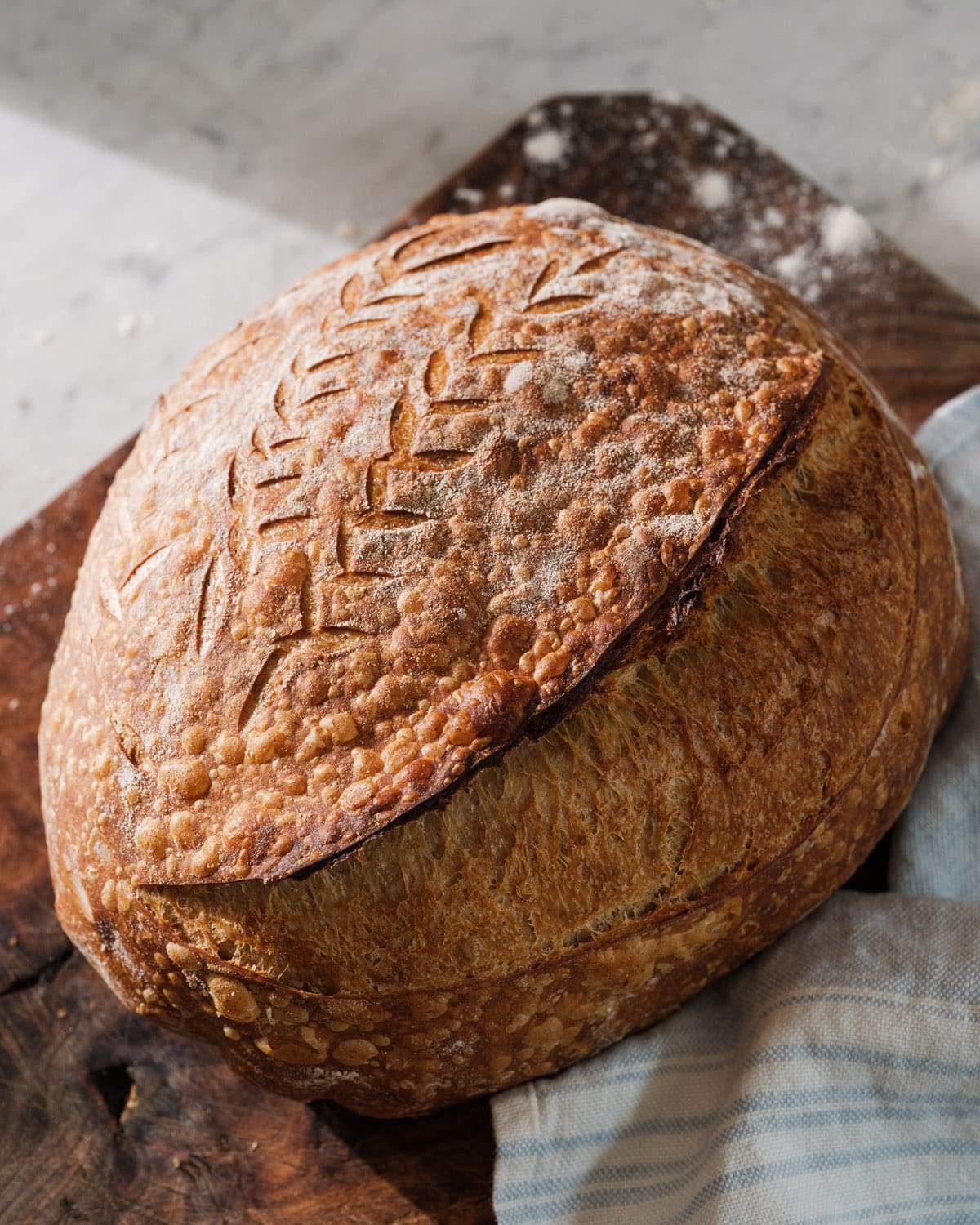
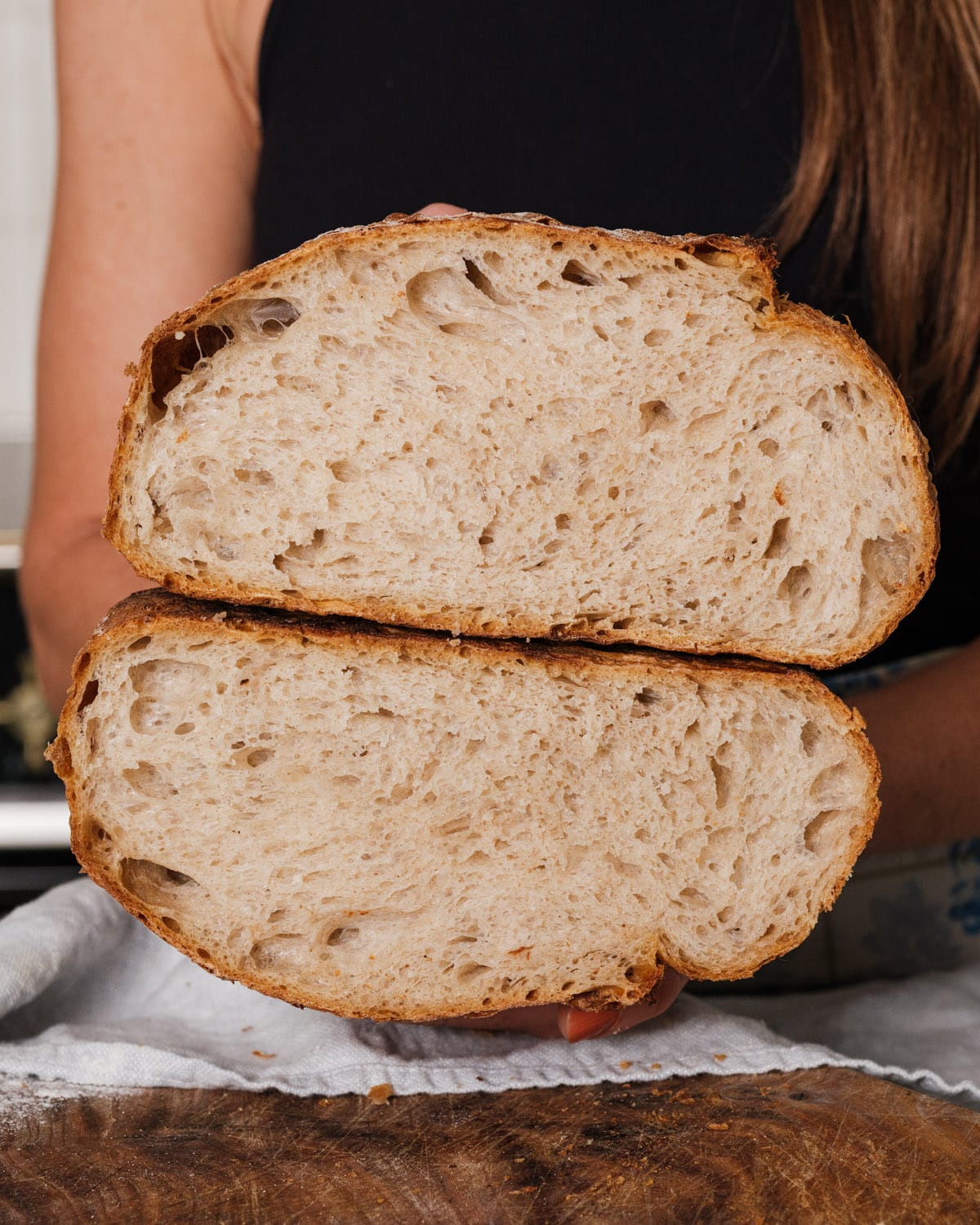
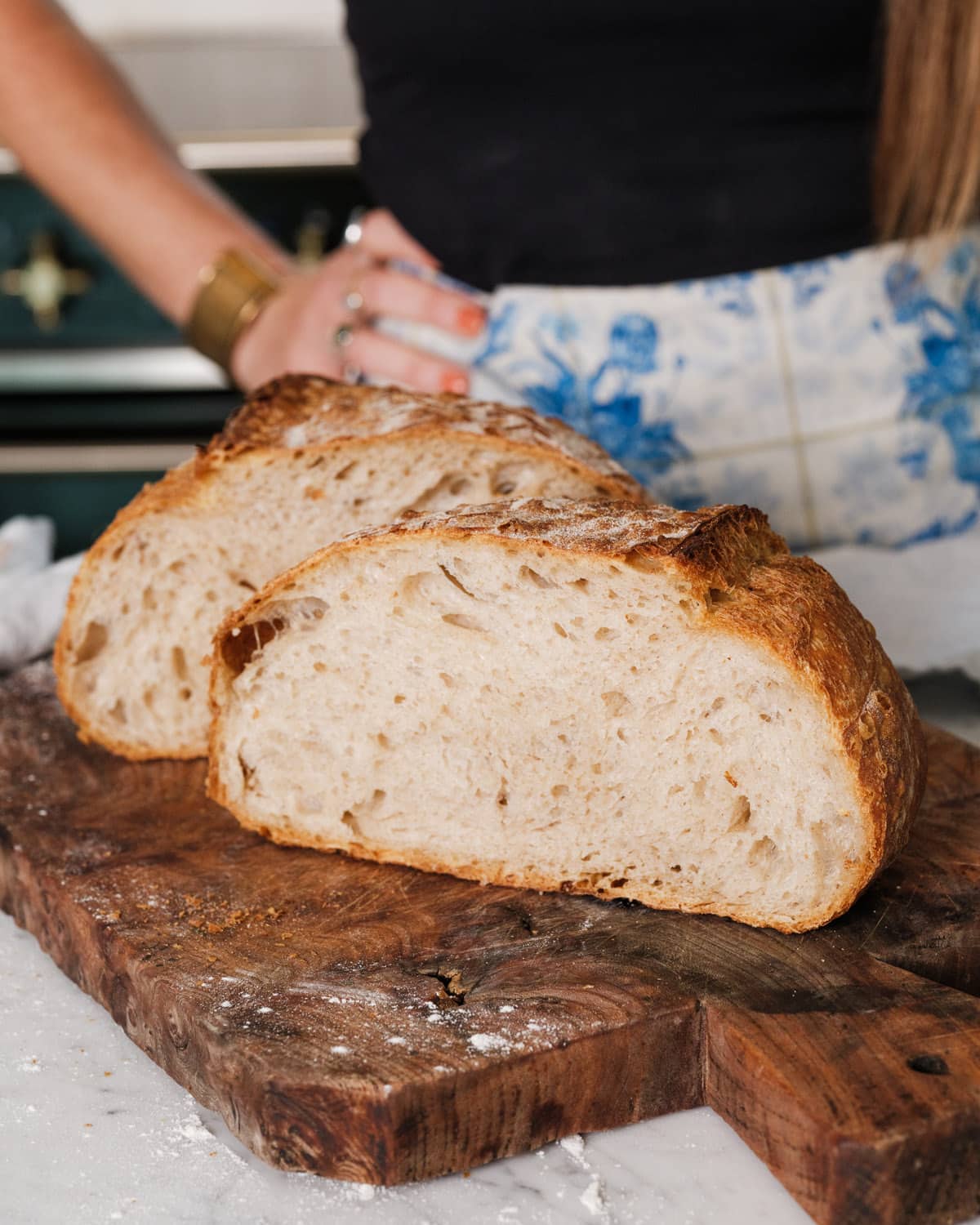
This easy sourdough bread recipe is foolproof for beginners and so much easier than most loaves! It comes out with the perfect chewy crust and tender crumb.
As a cookbook author, over the years I’ve also become a loud homemade bread enthusiast, with bread recipes in each of my three books from artisan bread to focaccia. I’m also a busy mom and I think homemade bread should be accessible to everyone. Years ago I used to make sourdough bread, but after having kids it became too hard to fit into my life.
So with the help of my husband Alex, I’ve created this new recipe that’s easy to memorize, works with some simple stretch and fold sessions, and tastes better than anything I’ve ever had in a bakery. My entire family is obsessed. I’m so excited to share my new Actually Easy Sourdough Bread recipe!
Why This Is the Easiest Sourdough Bread Recipe
There are so many recipes out there claiming to be “easy sourdough bread!” and “sourdough for beginners!” Here’s why this one is actually easy:
Recipe highlights:
3 easy stretch-and-fold sessions
Recipe is easy to memorize
Dough is easy to work with
About 30 minutes of hands-on work, then hands-off overnight rest in the fridge
Beginner-tested (and kid-approved!)
How it works? For this easy sourdough recipe I’ve added 10 grams each honey and olive oil. The olive oil coats the gluten strands, which makes the dough very easy to handle, and it bakes into a more tender crumb. The honey gives the sourdough starter a little more food which gives it a more predictable rise, and helps the crust brown. It also adds a nice balanced flavor, making the bread perfect for sandwiches and toast.
5-Star Reader Review
“I made the bread and it looks and smells amazing! After tasting it I LOVE THE FLAVOR. The addition of honey and oil really helps with the overall dough texture. I also found the hour-long breaks between folds and stretches made the dough very easy to handle. This is my new favorite sourdough recipe, so this is what I will use going forward!” -Tanvee
Video: Watch Me Make Easy Sourdough Bread
The most important thing when learning to bake bread is watching it! Here I’ve pulled in my husband Alex, a sourdough bread expert, to show you exactly how to mix, shape, and bake the dough. Watch this video before you go about making this bread!
Before You Start: Feeding Your Sourdough Starter
This recipe calls for 100 grams of ripe, 100% hydration sourdough starter at its peak. What does that mean, and how do you get it?
Peak means you fed it 4 to 8 hours before. It should be doubled and have bubbles throughout and small sour (but pleasantly so).
Here’s each tool you’ll need (reference the video to see me talk about each tool in detail):
Required Tools
Kitchen scale: This is a non-negotiable! When baking bread, using grams is essential because if you measure in cups the weight is variable. Don’t skip this!
Dutch oven: Baking sourdough bread in a Dutch oven traps the steam that comes off of the dough, which gives you a bakery-style rise and that beautiful blistering on the crust. My trick is to add an ice cube for the initial bake, which adds even more steam! You’ll remove the bread after 17 minutes and bake directly on the oven rack for the remaining time.
Banneton: This sourdough bread is a wet dough (about 77% hydration), so placing it into a basket (banneton) helps it hold its shape overnight. If you don’t have one, you can use a medium bowl lined with a floured tea towel.
Lame or sharp knife: You’ll need to score the bread before baking it, which gives the loaf a place to expand while it rises in the oven. I like using a lame because it’s so sharp and precise, but a sharp knife works too.
Instant-read thermometer: This is so you can check the internal temperature of the bread when baking: you’ll want it at 205°F inside.
Optional Items
Oven gloves or hot pads: Optional, but these gloves make things easy.
Shower cap or plastic wrap: A fun tip: I like using a disposable shower cap to cover my bowl! It makes it easy and you can reuse it many times.
Bread bag or towel: Also optional, but it’s a little easier to store in a bag.
Dough whisk or wooden spoon: I love how this dough whisk makes the stirring process easy.
The Easy Sourdough Baking Schedule
Here’s an example of a baking schedule for this easy sourdough bread. I work from home so I can also fit this into breaks during the work day, but if you don’t you can bake it up easily on the weekend. Here’s a breakdown:
Day 1
What To Do
Timing
Feed the starter
4 to 8 hours before mixing (day of or night before)
Mix the dough; cover and rest
1 hour
Stretch and fold #1; rest
1 hour
Stretch and fold #2; rest
1 hour
Stretch and fold #3; rest
2 to 3 hours
Shape, place in banneton, refrigerate overnight
12 to 18 hours
Day 2
What To Do
Timing
Preheat the Dutch oven
30 minutes
Score and bake
40 min
Cool completely
1 hour
Step-by-Step: The Stretch and Fold Method
The main part of this easy sourdough bread recipe that requires some technique is the stretching and folding. This process replaces kneading, and it’s very easy to do.
The best place to start here is watching the video of Alex showing you what to do. Essentially you’ll want to wet your hands so they don’t stick to the dough, then grab one edge of the dough, stretch it up, and fold it over the center. Then you’ll give the bowl a quarter turn and repeat all the way around. After that, you’ll lift the dough and stretch it around itself so that a boule (ball shape) forms.
Here’s what the dough looks like after each stage:
After mixing: It should look shaggy and sticky.
After the first stretch: The dough should be smoother and springier.
After the second and third stretches: At this point, the dough holds the ball shape and should start to have bubbles on the top.
Shaping The Dough and Scoring
Once you’ve gone through the stretches and folds, the only other part with some finesse is shaping the loaf and scoring it! Here’s the basic process (and again, reference the video for both shaping and scoring):
Fold the four corners of the dough into a packet. Then flip it seam-side down, and drag it toward you on the counter several times to build surface tension and make a loaf shape.
Flip the dough seam-side up into the floured banneton.
After the overnight rest, turn it out onto parchment paper. Cut one long 1/2-inch deep slit at a slight angle with a lame or sharp knife.
Tips For Baking This Easy Sourdough Bread
Once it’s shaped, it’s time to bake! Reference the recipe below for the specifics, but here’s what to know:
Preheat your Dutch oven for 30 minutes. You’ll want it blazing hot before you add the bread.
Add ice cube for the initial bake in the Dutch oven. This adds even more steam, which makes for the perfect rise and crispy crust.
Be careful when removing the loaf from the Dutch oven for the final bake. I use oven gloves when removing the loaf. As an extra precaution, I place my hot Dutch oven on the stovetop and then add a bunch of hot pads on top as a sign to everyone in my family: do not touch, this is hot!
How to Store Sourdough Bread
The most important part about sourdough is cooling and storage! Let the loaf cool completely before slicing, about 1 hour. Cutting into warm sourdough makes the crumb get gummy. After that:
Days 1 to 2: Store the bread in a towel or linen bread bag at room temperature. Do not store it in plastic (it gets soft and gummy) or refrigerated (it gets stale).
To freeze: Slice the loaf, then add the slices to a bag with the air pressed out and freeze up to 3 months. You can toast slices right from frozen.
Ways to Serve This Sourdough Bread
This sourdough bread recipe tastes absolutely incredible in so many ways:
With peanut butter, honey and a sprinkle of sea salt
This easy sourdough bread recipe is foolproof for beginners and so much easier than most loaves! It comes out with the perfect chewy crust and tender crumb.
Before you start, make sure your sourdough starter is at its peak; seeHow to Feed a Starter.
Mix the dough and rest 1 hour: In a large bowl, stir together the sourdough starter, warm water, honey, olive oil and salt. Add the whole wheat flour and bread flour, then stir until a shaggy dough forms. Cover and rest 1 hour.
Stretch 1 and rest 1 hour: With wet hands, grab one edge of the dough, stretch it up, and fold it over the center. Rotate the bowl and repeat until you’ve worked your way around the dough. Pick up the dough and continue stretching and folding, several more times until a tight boule is formed. (See the video for how to fold the dough.) Place back in the bowl, cover with plastic (or I use a reusable shower cap!) and rest 1 hour.
Stretch 2 and rest 1 hour: With wet hands, grab one edge of the dough, stretch it up, and fold it over the center. Rotate the bowl and repeat until you’ve worked your way around the dough. Pick up the dough and continue stretching and folding, several more times until a tight boule is formed. (See the video for how to fold the dough.) Place back in the bowl, cover and rest 1 hour.
Stretch 3 and rest 2 to 3 hours: With wet hands, grab one edge of the dough, stretch it up, and fold it over the center. Rotate the bowl and repeat until you’ve worked your way around the dough. Pick up the dough and continue stretching and folding, several more times until a tight boule is formed. Place back in the bowl, cover. Rest 2 to 3 hours, until doubled in size and very jiggly on top when the bowl is shaken. (See the video for what it should look like.)
Shape the bread: Prepare a counter lightly dusted with flour. Prepare a banneton dusted with flour or 50/50 GF flour. Carefully scrape the dough onto the counter. Gently stretch each corner up and over the center to form a packet, then flip the dough over and place your hands behind the dough and gently pull the dough towards you to increase the tension on the surface of the dough. Rotate and repeat until you have a tight boule shape. Carefully flip into the banneton (the dough will stretch to fill the banneton as it rests).
Cold ferment 12 hours: Cover the banneton and refrigerate overnight, 12-18 hours.
Day 2 (30 minutes preheat + 40 minute bake)
Preheat the Dutch oven: When ready to bake, position a rack in the center of the oven. Place a Dutch oven with lid on in the oven, and preheat the oven to 515°F for at least 30 minutes.
Bake 17 minutes in Dutch oven: Once preheated, prepare a square of parchment on the counter, along with an ice cube and lame or sharp knife. Remove the banneton from the fridge, and gently flip the bread onto the parchment paper. Use a sharp knife to cut a long 1/2-inch deep slit at a slight angle across the top of the bread. Remove the lid from the preheated Dutch oven and carefully pick up the parchment paper and drop the boule into the Dutch oven. Drop the ice cube into the side of the dutch oven, then quickly place the lid on and bake for 17 minutes.
Reduce heat and bake 22-24 minutes on rack: After 17 minutes, reduce the heat to 400F. Remove the dutch oven from the oven. Carefully lift bread out and place it directly on the oven rack and bake for 22-24 minutes until the bread is a dark golden brown and the internal temperature is at least 205°F [95°C] when measured with a food thermometer.
Cool: Remove the bread from the oven and place it on a baking rack until fully cool, about 1 hour (don’t cut it while warm or it will become gummy). After cooling, the bread is ready to eat. Store the bread wrapped in cloth or in a bread bag on the counter for up to 2 days, or slice and freeze wrapped in foil in a plastic bag for 3 months. Toast slices directly from frozen. Do not store the bread in plastic, or it will lose its texture.
Notes
Flour substitutions: Bread flour is essential in this recipe; don’t substitute it with more all-purpose flour.
Banneton alternatives: If you don’t have a banneton, you can proof the dough in a bowl lined with a well-floured tea towel.
Hydration level: This is a 77% hydration dough, which creates that nice balance of manageable handling with good open crumb.
Timing flexibility: If you need to adjust the schedule, you can leave the dough in the refrigerator for up to 18 hours (longer than that and it may overproof). You can also feed your starter earlier or later: just make sure it’s at peak activity (bubbly and doubled) before using it.
from A Couple Cooks https://ift.tt/5eUI8Cs
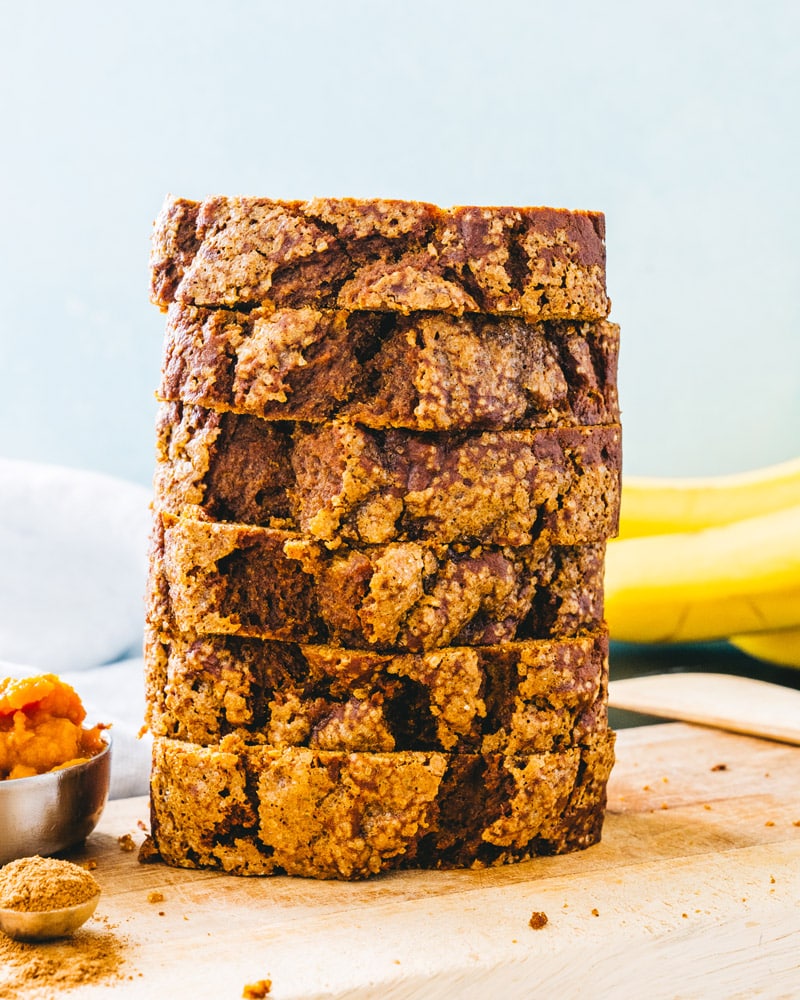
This pumpkin banana bread is so moist and warm spiced, finished with a crunchy sugar topping. It’s so cozy and tender, it’s actually my favorite pumpkin bread recipe!
What’s better than pumpkin bread? Pumpkin banana bread. I’m all about simplicity, so adding another ingredient to pumpkin bread is not our usual our style. But the ripe banana makes this fall bread incredibly moist, with a nuance in sweetness that makes it impossible not to take another bite.
It’s got just the right amount of cozy pumpkin spices, and a light crunchy turbinado sugar topping. It’s actually a spin on my Healthy Banana Bread and uses much less sugar than a classic banana bread, olive oil, and a little whole wheat flour too. To me, that’s a huge win!
Why You’ll Love This Recipe
It’s super moist and delicious. Adding bananas to pumpkin bread makes it super moist from the moisture in the bananas! The bananas also add a natural sweetness and richness that’s more nuanced than a straight pumpkin bread.
It’s easy. All you need is two bowls, a whisk, and one pan.
It’s lighter than most. It uses half the sugar of my standard pumpkin bread and includes olive il and a little whole wheat flour.
5 Star Reader Review
“The texture and flavour of this bread is delicious. Will definitely make this again. I used the recipe for the pumpkin spice as well.” -Lynn
Ingredients In Pumpkin Banana Bread
This pumpkin banana bread recipe was inspired by some blackening bananas on my counter and a half used can of pumpkin in our fridge. If you’re ever in this situation too, it’s the ideal time for this recipe! Why not mash up the fall classic with banana bread? Here are the basic ingredients you’ll need:
Very ripe bananas: The browner, the better here! I always use spotty, nearly black bananas because they add the best sweet flavor and moisture.
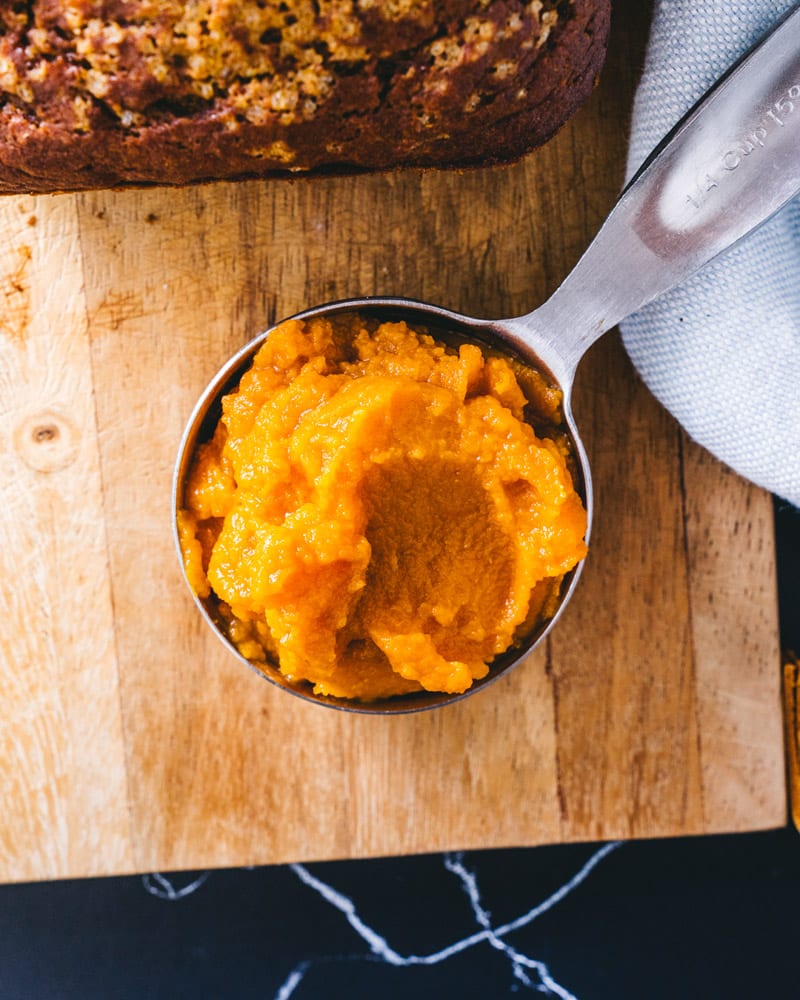
Pumpkin puree: Use canned 100% pumpkin, not pumpkin pie filling. You can always use up leftovers in my pumpkin waffles or pumpkin smoothie!
Olive oil: I bake with olive oil because it keeps the crumb tender and fits the way I love to eat (the Mediterranean diet). I did this successfully in my Healthy Banana Bread and I love it!
Light brown sugar: I like how this melds with the bananas and spices.
All-purpose and whole wheat flour: Adding just a bit of whole wheat flour adds nutty depth. You can use 100% all-purpose if that’s all you have.
Pumpkin pie spice: This blend makes the best cozy spiced flavor!
Eggs, vanilla, baking soda, and kosher salt: The remaining baking characters to complete the loaf.
How to Make Pumpkin Banana Bread
Here’s the overview of how to make it (or jump to the recipe for exact amounts):
Mash and measure. Mash the bananas in a large bowl, then measure out ¾ cup.
Whisk the wet ingredients. Add the pumpkin puree, oil, brown sugar, eggs, and vanilla and whisk until smooth.
Mix the dry ingredients. In a separate bowl, whisk the flour, pumpkin pie spice, baking soda, and salt. Stir them into the wet ingredients with a spatula.
Bake. Pour the batter into an oiled loaf pan, sprinkle with turbinado sugar, and bake at 375°F for about 45 minutes.
But you can also make homemade pumpkin pie spice! It’s a fun DIY project and a great gift. If you don’t have time to run to the store, you may already have the spices on hand.
Variations and Add-ins For Pumpkin Banana Bread
There are lots of ways to dress up this pumpkin banana bread if you’re a mix-in sort of person. I like making pumpkin bread straight, but it’s even more delicious with some of the following add-ins! You can add them to the batter or sprinkle on top:
Dark chocolate chips: Everyone loves pumpkin bread with a little chocolate.
Chopped walnuts or pecans: Add ½ cup chopped pecans and fold it into the dough.
Pumpkin seeds: I like sprinkling some pepitas over the top.
Streusel topping: Combine ¼ cup rolled oats, 2 tablespoons flour, 1 teaspoon pumpkin pie spice, ¼ cup turbinado sugar and ¼ cup salted butter (sliced into small pieces). Cut in the butter using a pastry cutter or fork until a crumbly streusel topping forms. Sprinkle on the top of the bread and bake.
This pumpkin banana bread is so moist and warm spiced, finished with a crunchy sugar topping. It’s so cozy and tender, it’s actually my favorite pumpkin bread recipe!
Preheat: Preheat the oven to 375 degrees Fahrenheit. Butter an 8 or 9-inch loaf pan.
Make the batter: Mash the bananas in the bottom of a large bowl and measure them out. Whisk in the pumpkin puree, oil, brown sugar, eggs, and vanilla extract. In a separate bowl, whisk the baking soda, Pumpkin Pie Spice, kosher salt, all-purpose flour, and whole wheat flour. Then stir the dry ingredients into the batter with a spoon.
Bake: Pour the batter into the prepared loaf pan. Top with a sprinkle of turbinado sugar (or brown sugar) if desired. Bake 45 minutes, then add foil loosely on the top. Bake another 10 to 15 minutes until a toothpick inserted into the center of the loaf comes out clean (or the internal temperature is 200 degrees): the exact timing will depend on the size of the pan.
Cool: Cool in the pan for 15 minutes. Then run a knife around the edge and invert the loaf onto a cooling rack. Serve warm or at room temperature. Storage info: The bread lasts 4 to 5 days at room temperature wrapped in aluminum foil, refrigerated for 10 days, or frozen for 3 months (slice it into pieces and wrap it in plastic wrap then a freezer-safe bag or container).
Notes
Variation: You can also do a more banana forward variation: 1 cup ripe mashed bananas, ¾ cup pumpkin, and ½ cup light brown sugar (I tested this spin in myHealthy Banana Bread).
Coconut milk vs almond milk: is one better? When to use each? Here’s what to know about these non-dairy milks.
Coconut milk vs almond milk: which is better? When should you use one or the other? Both of these non-dairy milks are great options: it just depends on what you’re looking for!
As a cookbook author and professional recipe developer, I’ve been using these two ingredients in my recipes for years: especially because I specialize in vegetarian and vegan recipes! Here’s what to know about when to use them and their nutritional profiles.
Coconut Milk Vs Almond Milk: Overview
What are the differences between these two products? Here’s the general breakdown:
What is coconut milk? Coconut milk is a milk extracted from the pulp of coconuts. It is rich and creamy, and has a high fat content. Canned coconut milk is a traditional ingredient used in Southeast Asian and East African cuisine, as well as Latin American and Caribbean foods. You can also buy coconut milk as a non-dairy beverage in a refrigerated carton: this is essentially coconut milk with added water.
What is almond milk? Almond milk is a plant milk made of ground almonds and water. It’s low in fat and has a very thin texture.
Which One Is Healthier?
Is there a better choice between coconut milk and almond milk? Well, it all depends on what you’re looking for. Both of these dairy-free milks can be part of a healthy diet. Here’s a breakdown of the nutrition info per 1 cup serving:
Ingredient
Calories
Protein
Carbs
Fat
Canned coconut milk
552
5 grams
13 grams
57 grams
Carton coconut milk
45
0 grams
1 grams
4.5 grams
Almond milk
40
1 gram
3.5 grams
3 grams
Conclusion: You can see from the table above that canned coconut milk is very high in calories and fat, so a little goes a long way. Carton coconut milk (found in the refrigerated section) and almond milk are lower in calories and fat, with fewer carbs and less protein than canned coconut milk.
How To Use Each In Cooking
With all of that in mind, here are some of the best ways to use these products!
Canned coconut milk: It’s high in fat and calories, so it’s best used in smaller quantities. The benefit is that it is very, very creamy. It’s great for adding a creamy richness to sauces like in a curry or soup, or blending into smoothies.
Almond milk and carton coconut milk have a thinner texture since they have less fat. They work in baking and also as a milk substitute like with granola or muesli.
Which Non-Dairy Milk To Use in Coffee and Baking
Here’s what I typically do:
In coffee: Carton coconut milk tastes a little richer than almond milk, which is more neutral. Both aren’t ideal for lattes, so if you love a latte, look for “barista” versions made for steaming. (Here’s my almond milk latte recipe.)
In baking: I typically like to use unsweetened almond milk in baking. Its flavor is mild and it swaps 1:1 for dairy milk in pancakes, muffins, and quick breads.
In curries and soups: Always canned coconut milk! Nothing else gives that creamy body.
With cereal, granola, or oatmeal: Either carton milk is great here.
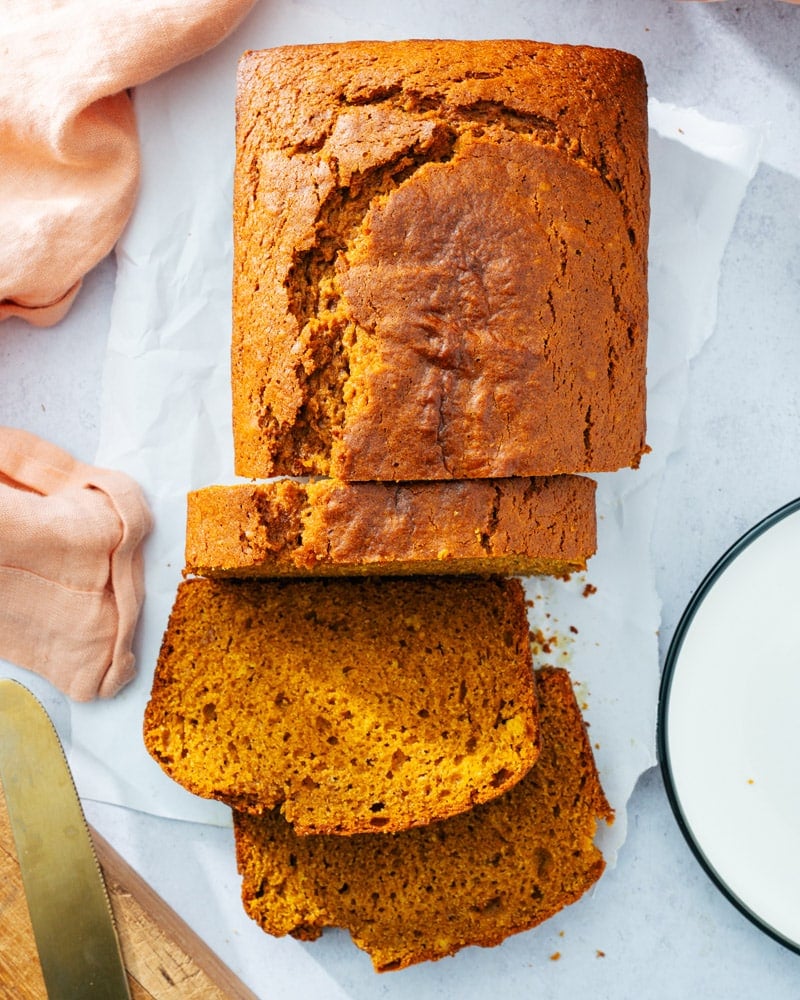
This easy pumpkin bread recipe mixes up in one bowl and bakes into a moist and cozy loaf. Top it with a quick maple glaze for my family’s favorite fall bake!
A good pumpkin bread recipe is an essential for any home cook. As a cookbook author and professional recipe developer, I’ve made more pumpkin bread recipes than I can count. But this one is my very favorite.
It’s so cozy-spiced and moist, with the perfect tender texture. And it’s so simple to whip up: all you need is one bowl, no special equipment: just dump and stir! When I’m feeling fancy, I top it with this maple glaze to take it over the top.
5 Star Reader Reviews
“So very yummy! This recipe was in this week’s email and I had to make it immediately! We devoured it! The glaze – lip smacking good!” -Jeni
“The best pumpkin bread! Thank you” -Cher
Ingredients You’ll Need
There are many ways to make a great pumpkin bread. I created this one to be ultra moist, with the perfect sweet, cozy spiced flavor and soft, tender crumb. There’s no need for a mixer or waiting for butter to come to room temperature: you can mix it all up in one bowl! Here are a few ingredient notes:
Pumpkin puree: Use canned or homemade; the most consistent brand I’ve found is Libby’s (we’re not affiliated).
Eggs: These bind the bread together. For egg-free, go to our Vegan Pumpkin Bread.
Granulated sugar: You can substitute the solid sweetener of your choice; I don’t recommend using maple syrup here.
Neutral oil: Oil makes a moister quick bread than butter; it also allows the recipe to be made in a bowl with no stand mixer.
Cinnamon and pumpkin pie spice (or ginger, allspice, and nutmeg): Individual spices make the boldest flavor, but you can also use pumpkin pie spice.
All purpose flour: You can substitute up to ¼ of the flour with whole wheat flour. For a gluten-free option, go to our Gluten Free Pumpkin Bread.
How to Make Pumpkin Bread, Step by Step
Here’s an overview of how to make this pumpkin bread recipe (or jump to the recipe card for quantities):
Prep the oven and pan. Preheat the oven to 350°F. Grease a 9 x 5-inch loaf pan and line it with parchment paper.
Whisk the wet ingredients. In a large bowl, whisk the eggs, then whisk in the pumpkin puree, sugar, oil, and vanilla.
Add the spices and baking powder. Whisk these in first. This method of adding the dry ingredients in two batches eliminates the need for a separate bowl.
Fold in the flour. Sprinkle in the flour half at a time, mixing with a spatula.
Bake. Pour the batter into the pan and bake 60 to 65 minutes, until the top is set and a toothpick comes out with a few clinging crumbs. Cool at least 30 minutes, and longer if you’d like to add a glaze.
Tips For A Perfectly Baked Loaf
Here are a few things to keep in mind for baking success with this pumpkin bread recipe:
Use an aluminum baking pan for best results (9 x 5-inch). Ceramic and glass pans don’t cook as evenly. This recipe is optimized for a 9 x 5 inch pan, but also works in a 8 x 4 inch pan.
Don’t overmix. Overmixing a quick bread can lead to holes in the texture of the crumb.
Let it cool fully before serving. This bread has an even more developed flavor once it is fully cooled: eating it after 2 hours is ideal.
Try It With Maple Glaze
This easy pumpkin bread is delicious plain, but we like it best with a glaze! This maple glaze is simple to whip up and has a sweet, maple-forward flavor.
Using maple glaze adds a pop of maple-forward flavor. It’s easy to find at the grocery store and it’s worth buying. However, the glaze tastes delicious without it!
Butter is helpful for storage. One advantage of the maple glaze is that the butter helps to make for a more solidified glaze that holds up better over time.
Want a solid glaze? Make double the glaze recipe below and glaze the cooled bread in the pan, so the glaze doesn’t run down the sides.
A gift: Wrap a cooled, unglazed loaf for a neighbor or teacher.
How to Store and Freeze Pumpkin Bread
This pumpkin bread recipe tastes even better the next day, because it picks up moisture during storage. Here are a few tips for storage of this quick bread:
Stores at room temperature for 4 days, wrapped tightly in aluminum foil.
Stores refrigerated for 10 days. Cold temperatures can make it taste dryer, so bring to room temperature before serving.
Stores frozen for up to 3 months. Slice the cooled bread, then freeze it in slices for up to 3 months. Freezing works best without the glaze.
This easy pumpkin bread recipe mixes up in one bowl and bakes into a moist and cozy loaf. I love topping it with maple glaze for my family’s favorite fall bake!
Preheat the oven to 350°F. Grease a 9 x 5 inch aluminum bread pan, then add parchment paper cut so that it fits the width and extends on both long sides, to easily remove the bread once its baked.
In a bowl, whisk the eggs. Then whisk in the pumpkin puree, sugar, oil, and vanilla.
Whisk in the cinnamon, ginger, allspice, nutmeg, and kosher salt. Then whisk in the baking powder and baking soda. Sprinkle in the flour, half at a time, and mix with a spatula until just combined and there are no more dry bits (don’t over-stir).
Pour the batter into the bread pan.
Bake 60 to 65 minutes, until the top is set and a toothpick comes out with a few clinging crumbs. Allow to cool in the pan for 30 minutes, then run a knife around the edges and pull up on the parchment paper to remove the bread. Allow to cool to room temperature if glazing.
If making the glaze, heat the butter and maple syrup in a small saucepan until the butter melts. In a medium bowl, slowly whisk the powdered sugar, butter and maple syrup, salt and maple extract until a thick glaze forms. Gradually add the milk to make a smooth, pourable glaze. If the glaze is too sticky, add a teaspoon more milk until it comes to a smooth, thick consistency. Use a fork to drizzle across the bread.
Slice into pieces and serve. Stores for 4 days at room temperature wrapped in foil, 10 days in the refrigerator (bring to room temperature before serving), or freeze in slices for a few months (freezing works best without the glaze).







 Pin Recipe